Tas Marine explains what marine piling contractors in Australia need before pricing, including pile details, access, testing and ground conditions.
A pile count is not enough for dependable marine piling pricing. We need to understand the structure, pile design, subsurface conditions, marine access, working restrictions and allocation of responsibilities before we can select a practical method and develop a meaningful price.
Core Documents Needed for Marine Piling Pricing
The strongest enquiry package clearly defines what is being built and identifies the information that remains preliminary. Issuing incomplete documents without marking the gaps creates assumptions that can later become exclusions, qualifications or variations.
Where available, provide:
- Design drawings and pile schedules: Include pile locations, quantities, materials, dimensions, design levels, anticipated lengths and connection details.
- Geotechnical information: Bore logs, laboratory results and interpreted ground or rock profiles help us assess likely installation conditions and equipment requirements.
- Hydrographic information: Seabed levels, water depths, tidal ranges and survey dates help establish whether floating plant can access and position at the workface.
- Existing-asset records: As-built drawings, service information, condition reports and known underwater obstructions can affect methodology and sequencing.
- Durability specifications: Identify specified steel grades, coatings, corrosion allowances, reinforcement, concrete filling or other treatment requirements.
- Testing and acceptance criteria: State whether the design or specification requires dynamic testing, restrike testing, integrity testing, load testing or installation records. These are project-dependent, not automatic inclusions.
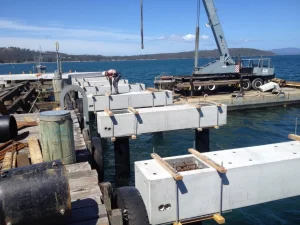
Our marine and foundation piling capabilities include timber, steel and concrete piles, along with driven, bored, sheet, spun and down-the-hole hammer piling.
Access Information Determines the Plant Allowance
Marine piling contractors in Australia cannot select plant from pile diameter alone. Water depth, tides, wave exposure, overhead restrictions and available working space may be just as important as the pile design.
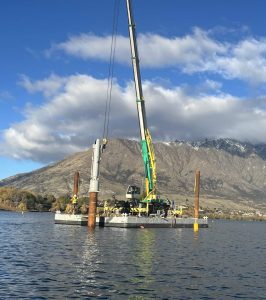
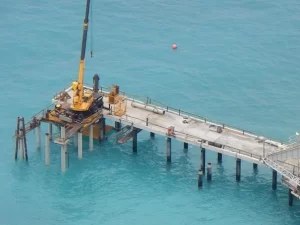
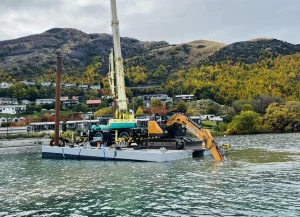
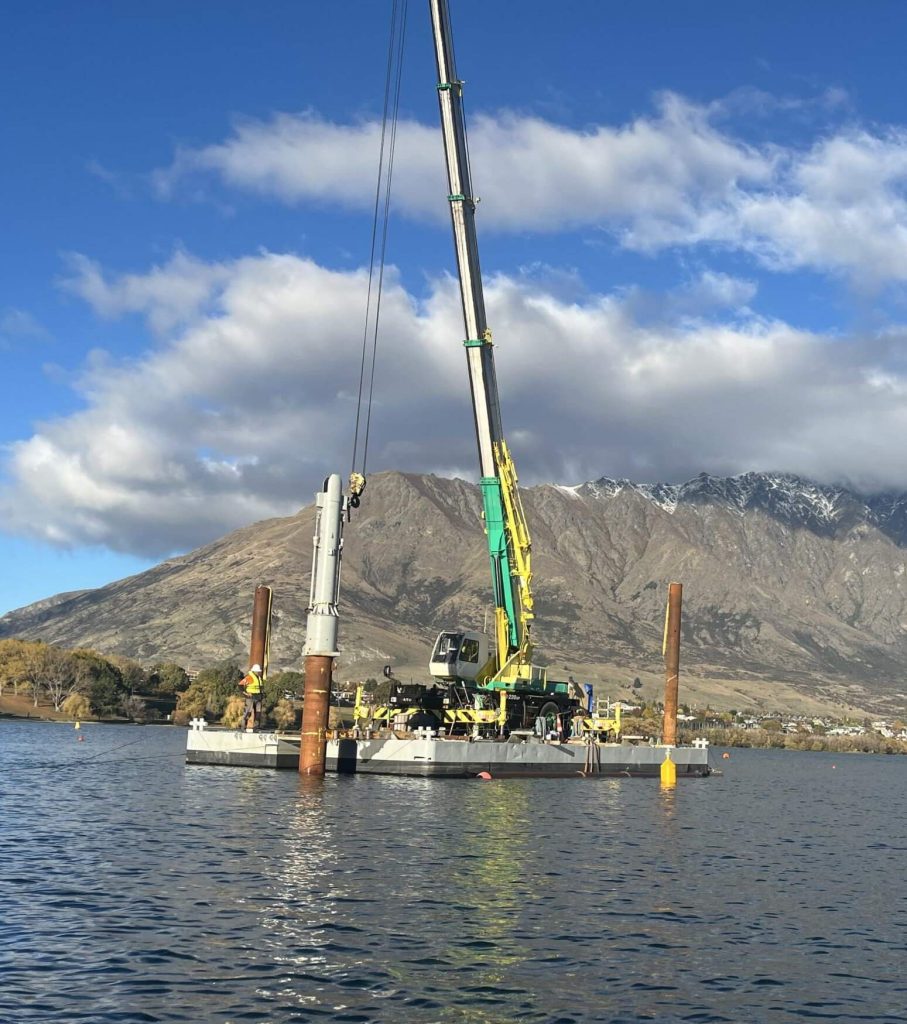
Tas Marine operates specialised floating plant, piling hammers, cranes, jack-up barges, workboats and modular pontoons. The actual spread depends on:
- Working depth and tidal range: These affect access, stability and available installation windows.
- Lift requirements: Pile length, weight, splicing and delivery arrangements influence crane capacity and handling.
- Land-side logistics: Laydown space, wharf loading limits, launch points and transport access affect mobilisation.
- Operational constraints: Live ports, vessel movements, public interfaces and staged access can reduce productive time.
- Ground conditions: Rock strength, obstructions and variable refusal levels can change the installation approach and expected production.
For difficult subsurface conditions, our article on marine piling methods for hard rock explains why investigation and methodology matter before work starts.
Define Safety, Environmental and Commercial Responsibilities
A price also needs a clear division of responsibilities. Tender documents should identify who provides permits, survey control, temporary works design, environmental monitoring, testing, spoil handling, power, water, security and access coordination.
The Safe Work Australia model code for construction work reinforces the need to identify site hazards and coordinate construction activities. For pricing, known requirements involving plant interaction, services, public access and site control should be disclosed rather than left for post-award resolution.
Environmental approval conditions may also restrict noise, vibration, turbidity, lighting, working hours or vessel movements. We need the project-specific conditions, not a generic statement that approvals will be obtained.
Send a Pricing Package That Reduces Assumptions
Good pricing information does not need to eliminate every uncertainty. It needs to show what is confirmed, what remains provisional and who carries each unresolved responsibility. That allows us to explain assumptions and identify where investigation could improve cost certainty.
To discuss a marine piling project, contact us. Include the program, geotechnical data, access constraints and testing requirements available so we can assess an appropriate construction approach.