Tas Marine provides expert analysis on seawall vs breakwall choices to protect coastal assets and maritime infrastructure at sites throughout Australia.
Australia’s coastlines are facing unprecedented challenges as rising sea levels and intense weather events like Southern Ocean swells and East Coast Lows increase the risk of shoreline recession. Determining the most effective defence for a specific location often comes down to the choice between a seawall and a breakwall. Selecting the correct infrastructure is essential for long-term asset protection and environmental stability across our diverse maritime regions.
What Is the Primary Difference Between a Seawall and a Breakwall?
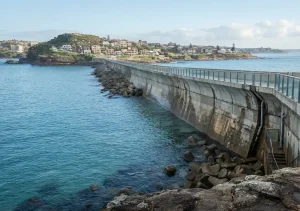
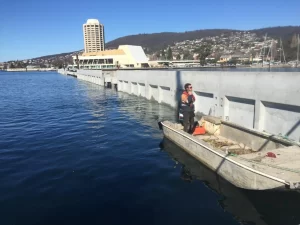
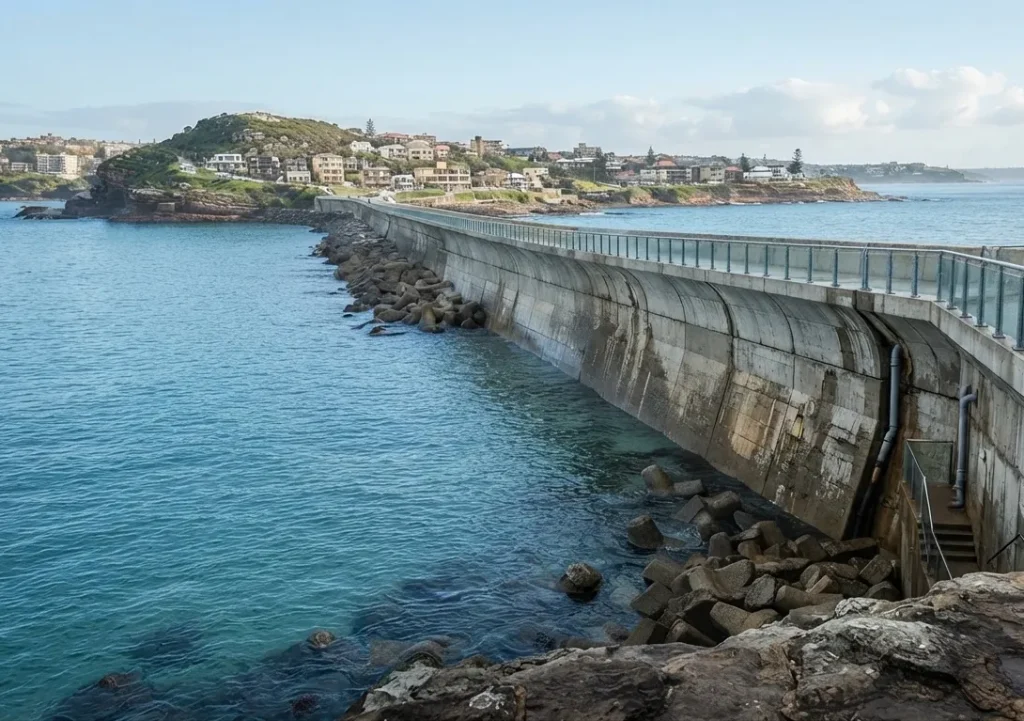
Seawalls are land-based barriers built parallel to the shore to protect high-value infrastructure from direct wave impact. Usually constructed from reinforced concrete, steel, or rock armour, they act as a final line of defence for civil and marine construction for waterfront infrastructure against encroaching storm surges.
In contrast, a breakwall is an offshore structure designed to intercept and dissipate wave energy before it ever reaches the coastline. This approach prioritises creating a calm, protected area of water rather than simply shielding the land at its immediate boundary.
Seawall vs Breakwall: Choosing Based on Site Functionality
Choosing the right protection method depends on your site’s intended use and the specific coastal hazards present. A seawall provides a space-efficient way to protect residential, public, and commercial assets from being undermined by the tide. Conversely, a breakwall is the superior choice for creating a calm vessel harbour or encouraging sand accumulation on depleted beaches through specialised techniques.
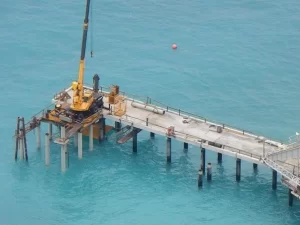
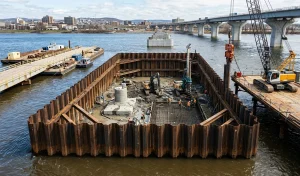
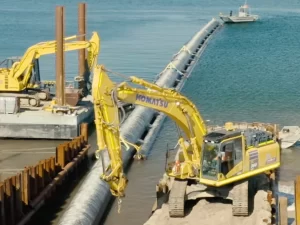
Our completion of the Derwent Sailing Squadron Break Wall project serves as a prime example of how these offshore structures provide the necessary shelter for maritime facilities. Consider the following functional requirements for your site:
- Choose a seawall if you have limited space and need to protect static assets like buildings or utilities.
- Opt for a seawall if the primary concern is preventing land loss during extreme storm surges.
- Choose a breakwall if you need to create a tranquil environment for a marina or boat ramp.
- Opt for a breakwall if you want to reduce wave intensity without installing a vertical barrier on the sand.
Essential Australian Regulatory and Environmental Factors
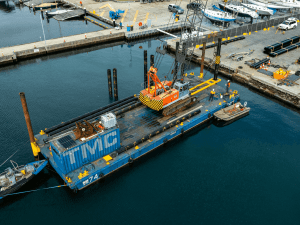
Australian maritime projects must comply with strict engineering standards and environmental legislation to ensure durability and prevent negative impacts on neighbouring shorelines. Tas Marine leverages deep local knowledge and heavy-duty equipment to deliver compliant, resilient coastal protection built for the unique Australian environment. Our professional team ensures all marine infrastructure is engineered for long-term stability and capable of withstanding the harshest Southern Ocean swells.
Protecting Your Shoreline with Tas Marine
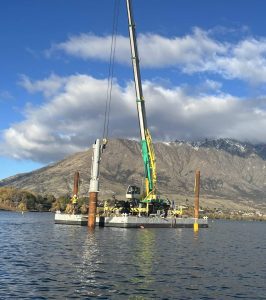
Coastal engineering requires a precise balance of technical skill and local knowledge to protect against harsh Australian conditions. Tas Marine offers the heavy-duty equipment and experience needed to safely install a seawall vs breakwall tailored to your specific site. Choosing the correct structural defence today ensures your maritime assets remain resilient against Southern Ocean swells for decades to come.
Contact us to secure professional assistance for your next coastal project, from initial site assessments through to final structural installation.
Related Blog Articles:
Coastal Bridge Construction: Structural Solutions for Marine and Waterfront Sites
Innovative Marine Construction Techniques for Waterfront Infrastructure Projects