Tas Marine addresses waterfront bridge construction challenges with expert marine solutions for durable, compliant marine coastal infrastructure projects.
Waterfront bridge projects play a critical role in Australia’s transport networks, supporting connectivity between coastal communities, ports, and urban centres. However, delivering these assets requires navigating complex waterfront bridge construction challenges that go beyond standard infrastructure builds. From environmental compliance to marine engineering demands, successful outcomes rely on specialised expertise and strategic planning.
Environmental Pressures in Waterfront Bridge Projects
Australia’s coastal and estuarine environments present unique pressures that directly shape bridge design and construction. Factors such as tidal movement, wave action, river hydraulics, and sediment transport influence how structures perform over time. In sensitive areas like river mouths or marine conservation zones, even small changes in water flow or seabed conditions can affect shoreline stability and navigation.
Environmental approvals are also a critical consideration for developers and planners. Projects must meet strict regulations covering water quality, marine habitats, wetlands, and biodiversity, while construction activities like piling and dredging must be carefully managed to limit ecological impact. In some cases, projects that may affect nationally protected environmental matters may also require referral and assessment under Australia’s EPBC Act environmental approval process, making early environmental planning essential.
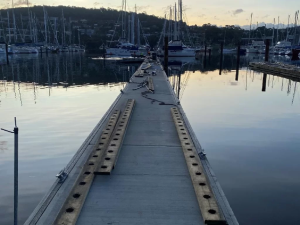
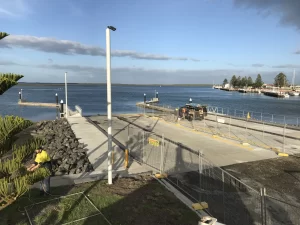
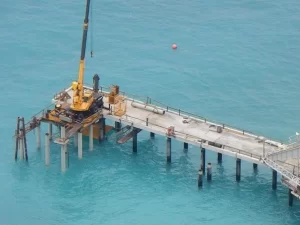
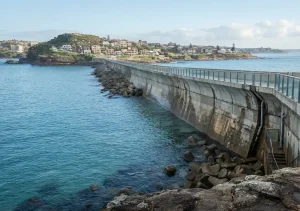
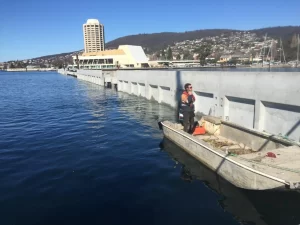
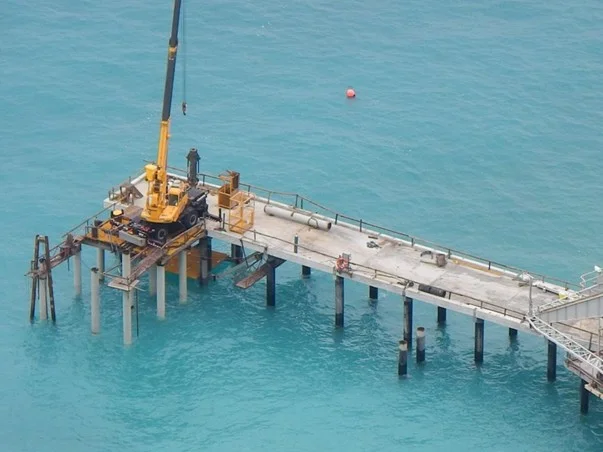
Projects such as the Bellerive Public Pier upgrade and the Flying Fish Cove jetty extension demonstrate how careful planning and marine construction expertise can minimise environmental impact while maintaining functionality. Early collaboration with environmental consultants and marine contractors helps ensure compliance while keeping projects on schedule and within budget.
Breaking Down Waterfront Bridge Construction Challenges
Delivering infrastructure in marine and coastal environments involves significant technical and operational complexities. These waterfront bridge construction challenges require a tailored approach that balances structural integrity with environmental performance. Addressing these factors early helps developers and planners reduce risk, manage costs, and ensure long-term asset durability.
Key challenges include:
- Scour and foundation stability: Constant water movement can erode sediments around bridge piers, affecting long-term stability.
- Corrosion in marine environments: Saltwater exposure accelerates deterioration of steel and reinforced concrete, particularly in tidal and splash zones.
- Material durability requirements: High-performance concrete mixes and protective coatings are critical to achieving extended service life.
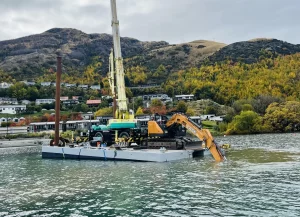
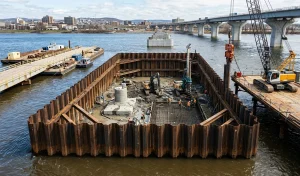
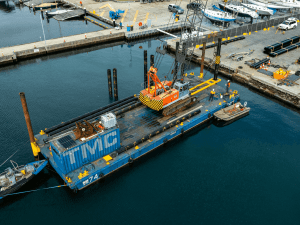
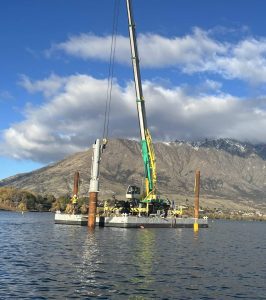
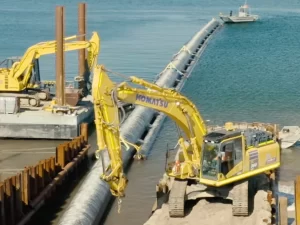
- Access and constructability constraints: Working over water often limits equipment access and requires specialised marine plant and temporary works, as seen in projects like the Kangaroo Bay footbridge and boardwalk.
- Navigation and safety considerations: Bridges must accommodate vessel movement, requiring precise clearance and alignment planning.
Engineering Solutions: From Design to Delivery
Overcoming waterfront bridge construction challenges requires an integrated approach that brings together engineering expertise, advanced modelling, and practical marine construction capabilities. Early-stage investigations, including hydraulic modelling, geotechnical analysis, and coastal process studies, provide critical insights that guide design decisions and reduce uncertainty.
Material selection also plays a key role in long-term performance. Durable concrete, corrosion-resistant reinforcements, and protective systems help extend asset life in harsh marine conditions, while careful construction sequencing, sediment control, and specialised equipment improve efficiency and minimise environmental impact.
Delivering Reliable Outcomes with Tas Marine
For developers and infrastructure planners, addressing waterfront bridge construction challenges requires more than technical knowledge and demands a partner with proven marine expertise. Tas Marine delivers practical, end-to-end solutions for complex waterfront and coastal infrastructure projects across Australia, with a strong focus on safety, efficiency, and environmental responsibility. By aligning marine construction capability with project requirements, Tas Marine helps clients reduce risk, streamline delivery, and achieve long-term performance outcomes.
If you are planning a waterfront bridge or coastal infrastructure project, contact us today to discuss how we can support your next development.
Related Blog Articles:
Coastal Bridge Construction: Structural Solutions for Marine and Waterfront Sites
Civil and Marine Construction for Waterfront Infrastructure Projects