Tas Marine provides specialist breakwall construction in Australia. Compare rock, floating, and piled designs for effective coastal and marina protection.
With over 25,000km of coastline, Australia’s maritime infrastructure must withstand some of the world’s most diverse wave climates. As a result, breakwall construction in Australia requires a tailored approach that balances structural integrity with the unique demands of our southern waters. Selecting the right design is not just a matter of aesthetics but a critical decision for long-term coastal resilience, often requiring specialised marine construction techniques for waterfront projects.
What are the Key Considerations for Breakwall Construction in Australia?
Before construction, engineers must evaluate environmental factors like tidal ranges and “fetch” to ensure maritime structures can withstand the demanding Australian elements. Following Australian Standard AS 4997-2005 is vital for maintaining safety and structural integrity throughout a projected 50-year design life. Detailed site assessments further ensure that all materials are specifically selected to resist corrosive salt spray and the unique conditions of the local coastal area.
To ensure a successful installation, the following factors are typically prioritised:
- Wave Climate: Understanding if the site faces high-energy open ocean swells or protected estuary chop.
- Geotechnical Data: Assessing the seabed’s ability to support the weight of heavy rock or the load of driven piles.
- Environmental Compliance: Meeting the strict requirements of state-based coastal management acts and local council regulations.
- Operational Requirements: Determining if the structure needs to serve as a berthing area or simply as a wave attenuator.
Rock vs. Floating: Balancing Energy Dissipation and Ecological Impact
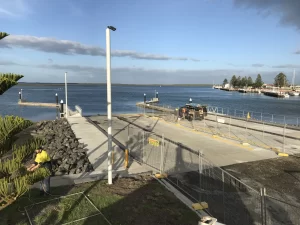
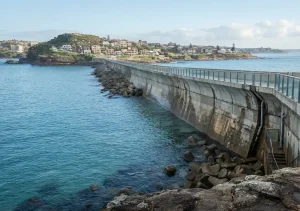
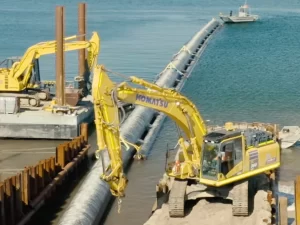
Rock or rubble-mound breakwaters are the traditional standard for high-energy environments such as the Tasmanian coast. These structures use heavy primary armour stones to dissipate wave energy and effectively reduce shoreline erosion, a method successfully implemented for the Kingston Beach Breakwall. While highly durable, their large physical footprint on the seabed is a significant consideration.
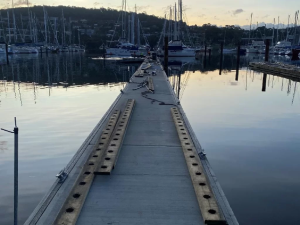
Floating breakwalls provide a modern, modular alternative for deeper or environmentally sensitive areas where seabed disturbance must be minimised. These systems allow for natural sand movement and fish migration, making them a popular choice for protected Australian marinas. Although they are best suited for shorter-fetch environments, they offer unmatched flexibility and ecological benefits.
Piled Wave Screens: The Surgical Choice for High-Density Waterfronts
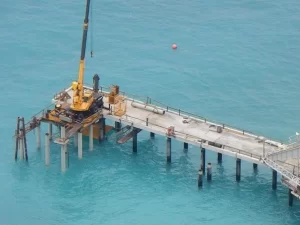
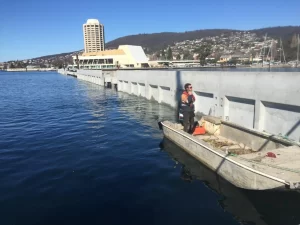
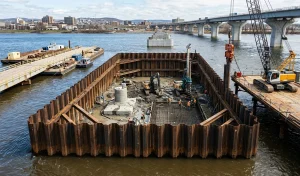
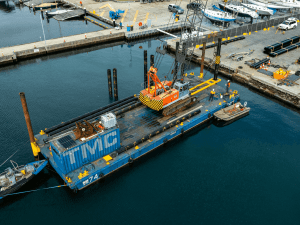
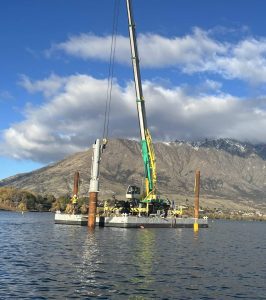
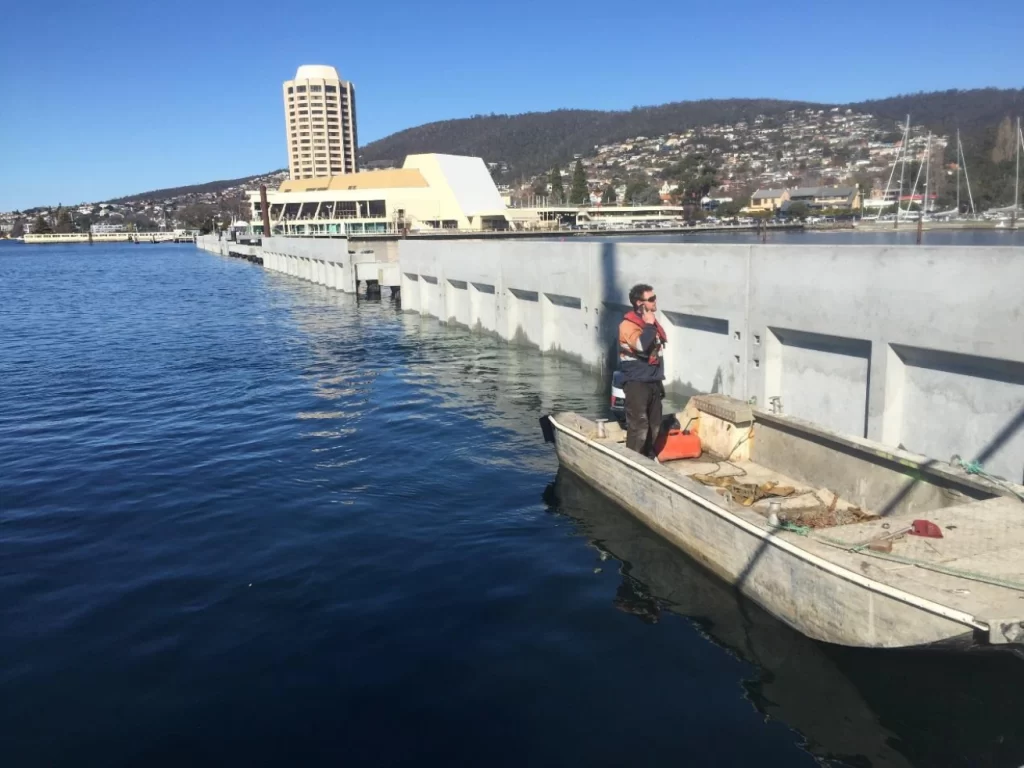
Piled wave screens are the most efficient solution for urbanised waterfronts, such as commercial ports and residential canals, where space is limited. These systems involve driving steel or concrete piles into the seabed to support vertical panels that effectively block incoming wave energy. This surgical approach maximises usable water space for navigation and berthing by avoiding the wide footprint required for traditional rock walls.
Since these vertical walls reflect energy rather than absorbing it, expert engineering is required to prevent turbulence and seabed scour. When designed correctly, these solutions provide a professional finish that integrates seamlessly with quay walls and ferry terminals. This ensures a high-performance maritime structure that serves both aesthetic and functional purposes for modern Australian developments.
Leading the Way in Australian Breakwall Engineering with Tas Marine
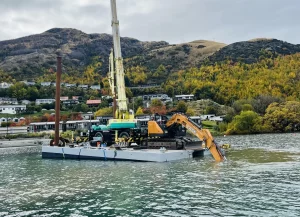
Tas Marine specialises in delivering tailored maritime defence systems that balance cost, performance, and environmental impact. Whether you require a durable rock wall or a flexible floating system, our team ensures every project meets the highest Australian engineering standards. Our extensive experience in breakwall construction in Australia allows us to guide you through the entire process, from initial site assessment to final installation.
Contact our engineering specialists today to arrange a consultation for your next coastal or marina project.
Related Blog Articles:
Civil and Marine Construction for Waterfront Infrastructure Projects
Land-Based Piling Services That Support Harbours, Docks, and Waterfront Infrastructure