Tas Marine Construction (TMC) Pty Ltd provides navigational aid installation across Australia for new beacon and existing asset replacement project scopes.
Ports, marina operators and public asset owners need to decide if a navigation risk requires a new beacon or work on an existing structure. A new aid may change how mariners identify a channel, hazard or safe-water route, while replacement can temporarily remove a familiar visual reference. Properly scoped navigational aid installation therefore depends on an approved navigation function, sound asset information and a practical construction method for an operating waterway.
Does the Project Need a New Beacon?
A new beacon is appropriate when a newly identified or changed navigation risk cannot be adequately addressed by an existing aid. The Australian Maritime Safety Authority’s navigation services outlook explains that its coastal network includes beacons, buoys, lighthouses and electronic aids, while states, territories and ports operate many additional assets. The responsible authority or asset owner must define the purpose, approved position, mark type and operating characteristics.
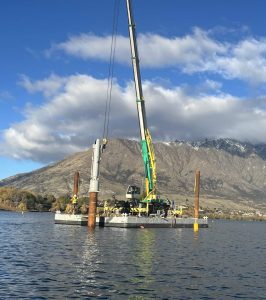
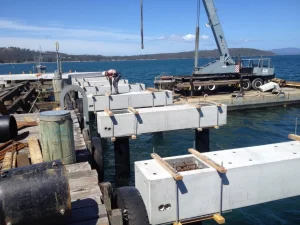
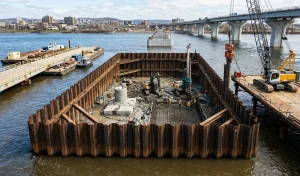
Site investigations should cover bathymetry, tides, waves, currents, vessel routes, seabed conditions and installation access. Consultation and environmental or heritage controls may also affect the accepted location and method. Once these requirements are established, we can assess piling, rock fixing, floating-plant access and other works covered by our marine and civil construction services.
When Is Asset Replacement the Better Scope?
Replacement is appropriate when damage, corrosion, repeated failures or obsolete parts make repair impractical. Failure of a platform, lantern or power system alone does not justify replacing the supporting structure. The scope should separate reusable components from items requiring repair, removal or renewal.
Key information includes:
- Existing asset: Provide drawings, photographs, inspection findings, maintenance records, outage history and known damage.
- Replacement boundary: Identify if the scope covers equipment, the topside, access components, the pile, the foundation or the complete asset.
- Navigation continuity: Confirm temporary marking, lighting and notification responsibilities with the relevant authority.
- Marine access: Record water depth, tide windows, vessel traffic, crane requirements, diving needs and anchoring constraints.
- Removal requirements: Define how redundant piles, structures, foundations or seabed obstructions will be handled.
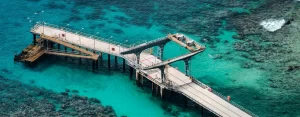
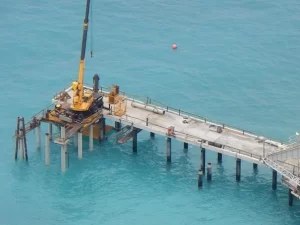
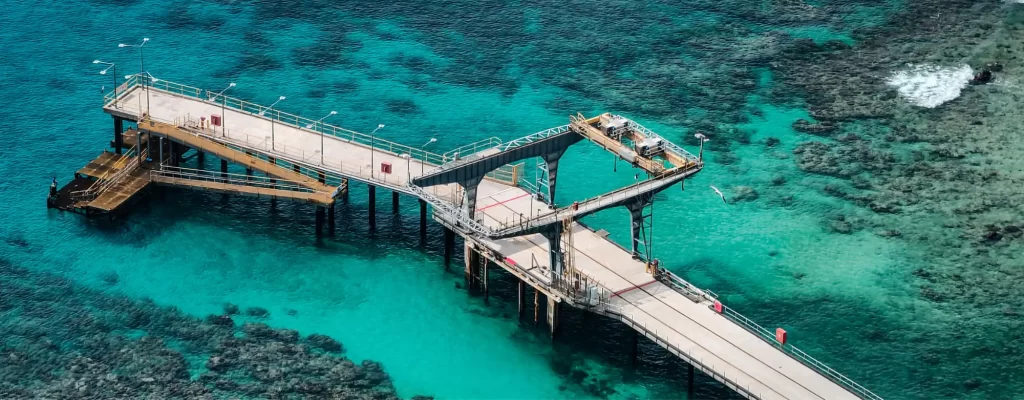
- Comparable site capability: Our Flying Fish Cove Jetty Extension project involved remote mobilisation, exposed tidal-zone construction and deep pile installation.
What Must Be Confirmed Before Marine Works Begin?
Service continuity is critical when removing an aid that mariners already use. Temporary lighting or marking, Notices to Mariners and coordination with the harbour master or vessel traffic service may be required. Diving, lifting and piling may also need to stop or move clear for scheduled vessel movements under project-specific controls.
A navigational aid installation brief should cover approvals, coordinates, drawings, specifications, site conditions, access, work windows and handover. It should also assign responsibility for temporary aids, testing, as-built surveys and record updates. Clear documentation helps us select suitable plant, sequence the work and price mobilisation without assuming site conditions that have not been verified.
Tas Marine Construction for Navigational Aid Installation
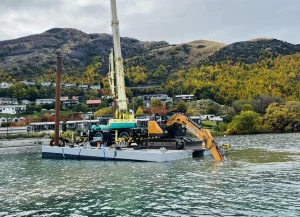
At Tas Marine Construction, we install and maintain navigational aids and beacons as part of our marine and civil construction services. Our piling capability and specialised floating plant allow us to deliver new structures, targeted replacement work and complete removal and renewal scopes. Early definition of the approved design, asset condition and access constraints gives us a clearer basis for construction programming and pricing.
Request a project assessment for your approved beacon scope, site conditions and marine access requirements.