Tas Marine delivers boat ramp upgrades for councils and asset owners across Australia, including marine construction, piling and concrete works.
Boat ramp upgrades should be considered when assessments show a facility no longer meets required safety, access, capacity or service expectations. Councils need evidence covering the ramp, associated marine structures and land-side interfaces before setting the project scope.
When Should Councils Plan Boat Ramp Upgrades?
A council should investigate an upgrade when defects recur, access becomes unreliable or the facility no longer suits its intended users and operating conditions. Begin with an inspection and engineering assessment because visible defects do not always require full replacement.
Indicators requiring review may include:
- Concrete deterioration: Cracking, spalling, exposed reinforcement, failed joints or damaged edges may require investigation.
- Foundation concerns: Undermining, settlement, scour or movement can affect the ramp and connected structures.
- Restricted tidal access: Ramp length, toe depth, gradient or sediment accumulation may limit use at certain water levels.
- Worn marine structures: Piles, pontoons, jetties, fenders, ladders and gangways may need repair or replacement.
- Unsafe circulation: Vehicle, trailer and pedestrian movements may conflict during launching, retrieval or peak periods.
These signs do not prescribe a solution. Inspection findings, engineering advice, user demand, environmental conditions, funding and the remaining asset life should inform whether the council repairs, rehabilitates, extends or replaces the facility.
Define the Entire Facility Before Procurement
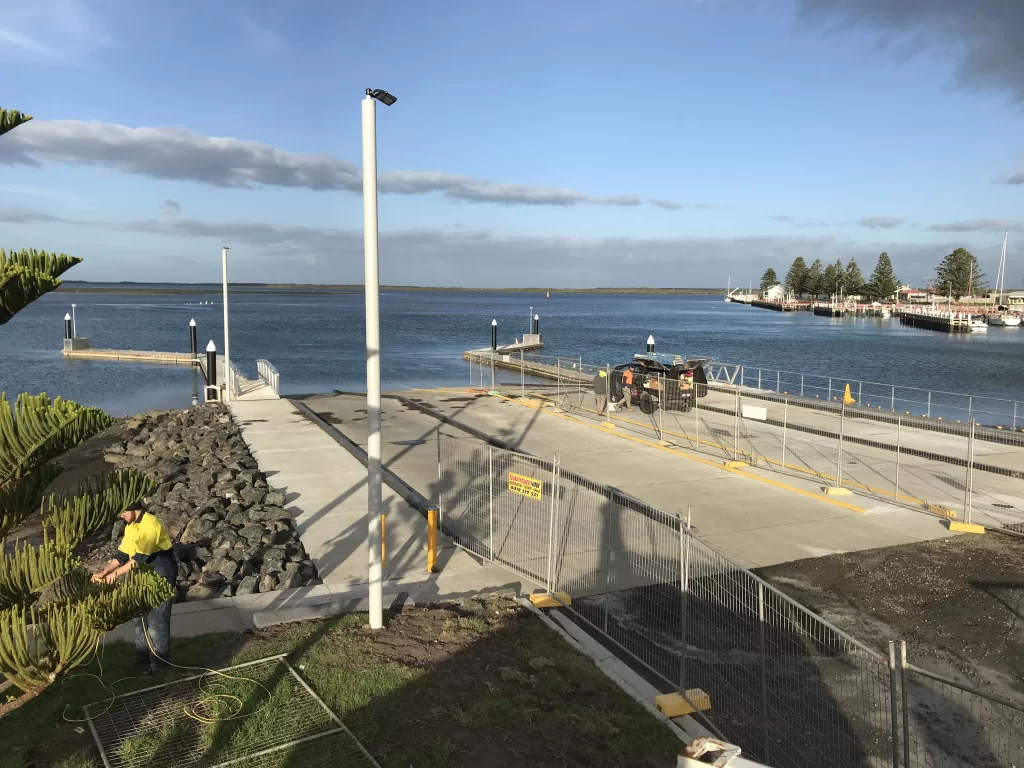
A boat ramp is part of a wider access system. The project brief should explain which elements are included, the required operating outcome and which party is responsible for investigation, design, approvals, construction and handover.
Use the Transport for NSW Boat Ramp Facility Guidelines to frame demand, site conditions, geometry, pontoons, circulation, parking and accessibility. Confirm local approvals separately.
A procurement-ready scope may cover:
- Site information: Surveys, geotechnical data, tidal levels, wave exposure, sediment conditions and existing drawings.
- Ramp requirements: Width, gradient, toe level, surface treatment, loading and connection to the shore.
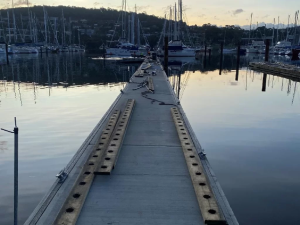
- Supporting assets: Jetties, pontoons, piles, walkways, fenders, bollards, lighting and navigation aids.
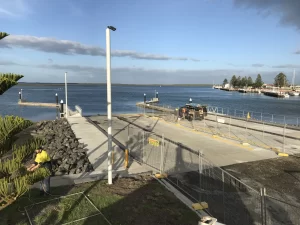
- Land-side works: Trailer circulation, parking, drainage, pavement, pedestrian routes and signage.
- Delivery constraints: Public closures, seasonal demand, environmental controls, marine access and construction windows.
- Acceptance requirements: Inspection points, testing, records, certifications, defects and handover documentation.
Plan Construction Around Coastal Conditions
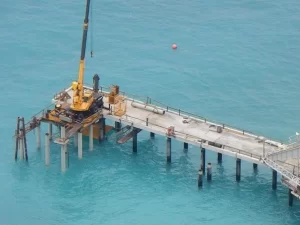
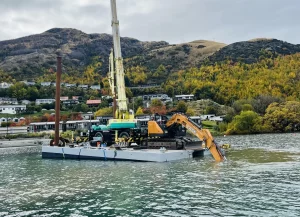
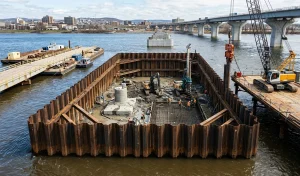
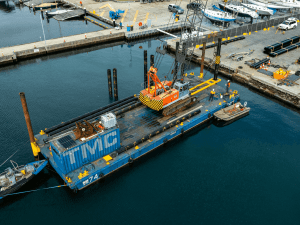
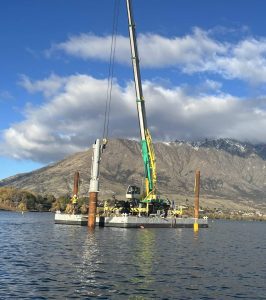
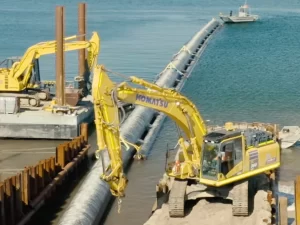
Our marine and civil construction services include boat ramps, wharves, jetties, marinas, pontoons, marine piling, dredging, concrete structures, demolition and remediation. The required plant and work method depend on water depth, access, ground conditions, tides, weather and the approved design.
Our Fortescue Bay Boat Ramp and Jetty project replaced storm-damaged ramp and jetty infrastructure and added walkways and bollards for Three Capes Track users. It shows why connected assets should be scoped together.
Develop a Constructible Upgrade Scope with Tas Marine
Tas Marine delivers approved marine and civil construction scopes for councils, government bodies and asset owners across Australia and New Zealand.
Send condition reports, drawings, site information, required outcomes and the procurement timeframe. Request an early site-specific project discussion so we can identify delivery constraints and the next practical step.