Plan tidal zone construction around access, work windows and plant. See which site details to provide for a Tas Marine project enquiry.
For tidal zone construction, access, task duration and plant suitability must be planned together because changing water levels can expose or inundate the work area. Our team at Tas Marine, delivers marine and civil projects across Australia, including jetties, boat ramps, piling and infrastructure repairs.
What Makes Tidal Zone Construction Difficult to Plan?
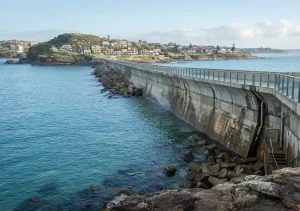
Conditions at the shoreline can change within hours, so a fixed construction sequence may not work. Tide predictions provide a starting point, but weather and ocean circulation can cause actual water levels to differ, while waves and currents may shorten the available work window.
- Changing access: Low tide may expose the work area, while the incoming tide can cover access routes and restrict the movement of workers and equipment.
- Uncertain ground: Exposed sand, mud or sediment may appear firm without having enough bearing capacity for heavy plant.
- Limited work windows: Crews need time to establish the area, complete the task, inspect it and withdraw before conditions become unsuitable.
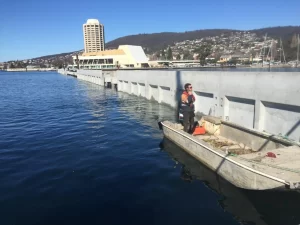
- Marine activity: Vessels, waterfront operations and public access may require exclusion zones or staged closures.
- Environmental exposure: Excavation, piling and demolition can disturb sediment, so suitable erosion, spill and water quality controls should be planned before work begins.
Coordinate Site Access with the Tidal Window
For tidal zone construction, access planning should cover every stage, from mobilisation and material delivery to emergency withdrawal. The lowest predicted tide is not automatically the safest period because ground conditions, currents and the work front still require assessment.
- Check predictions and conditions: Refer to the nearest relevant location in Bureau of Meteorology tide predictions, then monitor marine forecasts, weather and actual site conditions.
- Set task limits: Allow enough time for setup, construction, inspection and pack-up, with a clear stopping point if progress falls behind schedule.
- Plan separate routes: Identify how workers, plant and materials will reach the work front without creating conflicts or blocking an emergency exit.
- Protect stored materials: Keep equipment, fuels and construction materials outside areas that may be inundated or affected by waves.
- Prepare contingencies: Establish how temporary works and excavations will be left safe and how equipment will be moved or protected if the working window closes early.
Match Plant and Temporary Works to the Site
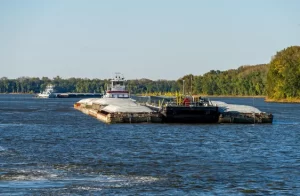
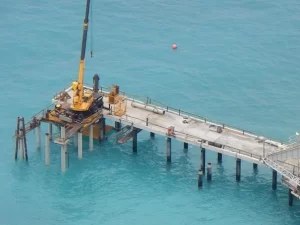
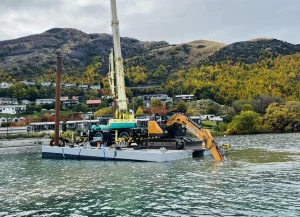
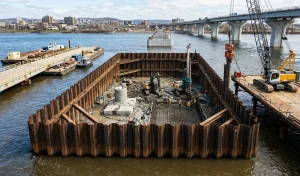
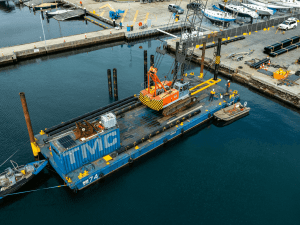
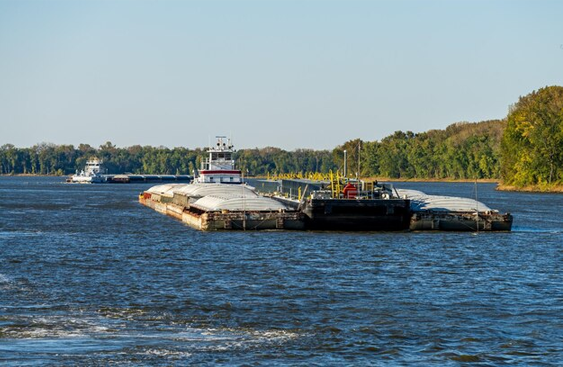
Plant selection should suit ground conditions, space, reach, loads and water depth. Equipment may include land-based excavators, cranes, floating plant or jack-up barges, with temporary works such as sheet piling or cofferdams where needed. Barge-based operations must also account for loading, mooring, weather and vessel stability.
Discuss the Construction Method with Tas Marine
Our marine and civil construction services are supported by floating plant, piling equipment, cranes, excavators and jack-up barges. Equipment selection still depends on the location, ground conditions, scope and engineering requirements, rather than a standard approach for every waterfront.
Send us your tidal zone construction scope, site location, drawings, available ground or seabed information and access restrictions through our project enquiry page. Include operational closures and approval status so we can discuss a practical starting point for your project.